
Published: 27 October 2026 | Category: Tax Updates & Compliance
On 26 October 2026, the UAE Ministry of Finance released Version 2.0 of the UAE Electronic Invoicing Guidelines, clarifying several important requirements for businesses preparing for e-invoicing.
Here are six key updates worth knowing.
What Is UAE E-Invoicing?
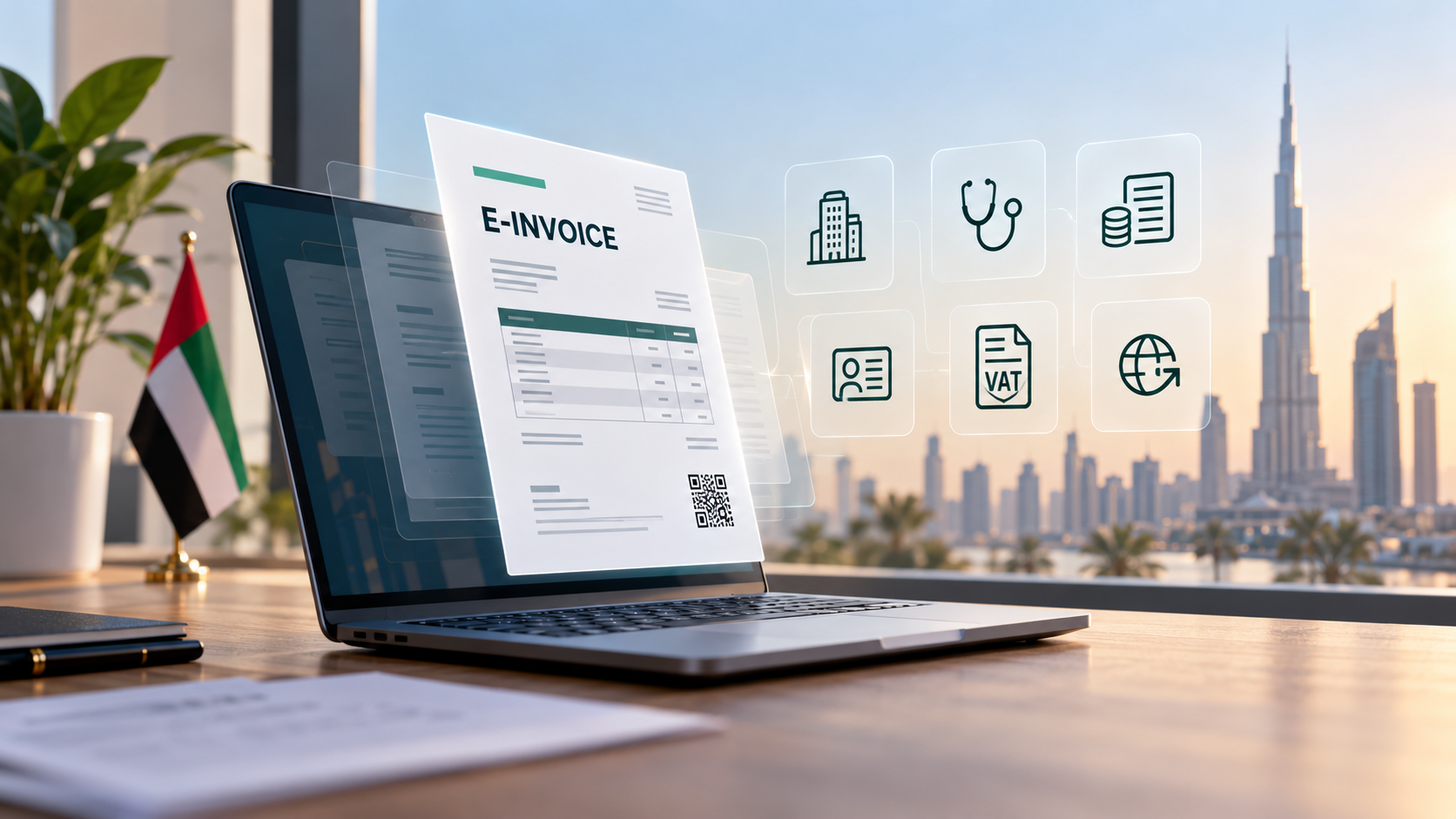
E-invoicing allows businesses to create, send, and receive invoices in a structured digital format that computer systems can process automatically. Unlike a PDF sent by email, an e-invoice must meet specific requirements and be exchanged through the electronic invoicing network.
1. Newly Established Businesses
Version 2.0 states that businesses within the e-invoicing framework must appoint an Accredited Service Provider (ASP) and complete onboarding before issuing their first invoice, regardless of when they were established.
This raises questions for businesses established in 2026, particularly those below AED 50 million in annual revenue.
Although the standard implementation deadline for these businesses is 1 July 2027, the separate onboarding requirement may affect their situation. Businesses converting from a sole establishment to an LLC should also review their circumstances.
What to do: Seek clarification from the Federal Tax Authority (FTA) or a qualified tax adviser if your applicable deadline is unclear.
2. Healthcare Services and Insurance Claims
When an insurance company pays a patient’s medical bill, this does not automatically make the transaction business-to-business (B2B).
The actual service and contractual arrangement between the parties determine the appropriate treatment—not simply who pays.
3. Advance Payments
If a business receives an advance payment before issuing the final invoice, the final e-invoice should reflect the remaining balance and reference the earlier advance invoice.
For transactions involving multiple items, advances should be allocated appropriately. The allocation must be supported and must not change the VAT treatment.
Example: If the total is AED 10,000 and an advance of AED 3,000 has already been invoiced, the final invoice should reflect the outstanding AED 7,000.
4. Different TINs in VAT and Corporate Tax Profiles
Businesses may encounter different Tax Identification Numbers (TINs) in their VAT and Corporate Tax profiles.
Rather than guessing which number to use, businesses should seek clarification through the FTA’s Clarifications service or consult a qualified tax adviser.
5. Invoice Type Codes 380 and 480
The guidelines clarify the difference between two invoice codes:
- Code 380: Standard invoice, subject to applicable requirements.
- Code 480: Used only for invoices relating exclusively to supplies outside the scope of VAT.
Zero-rated and exempt supplies must not be classified under code 480 simply because no VAT is charged.
6. Predefined Buyer Endpoints
Buyer endpoints help route electronic invoices to the correct recipient. Version 2.0 highlights two predefined endpoints:
0235:9900000098:— For buyers not subject to UAE e-invoicing who do not have a Participant Identifier.0235:9900000099:— For export transactions where the receiver is not registered in Peppol.
The appropriate endpoint depends on the buyer’s status and the transaction—not just the buyer’s location.
UAE E-Invoicing Deadlines
Businesses should also be aware of the standard timeline in Version 2.0:
| Annual revenue | Appoint an ASP by | Implement by |
|---|---|---|
| AED 50 million or more | 31 October 2026 | 1 January 2027 |
| Below AED 50 million | 31 March 2027 | 1 July 2027 |
Newly established businesses should also consider the separate onboarding requirement before relying on the standard timeline.
How Should Businesses Prepare?
A few practical steps can help businesses get ready:
- Confirm whether the business falls within the e-invoicing framework.
- Check the applicable deadlines.
- Review customer and taxpayer information.
- Ensure advance payments and invoice classifications are handled correctly.
- Seek clarification if the business is newly established or undergoing restructuring.
Conclusion
Version 2.0 provides important clarification on how businesses should handle invoices, advance payments, buyer information, and onboarding.
The key takeaway: Preparing for e-invoicing means understanding both the deadlines and how the requirements apply to your business.
Source: UAE Ministry of Finance, UAE Electronic Invoicing Guidelines – Version 2.0, dated 26 October 2026.

